



Key Takeaways
- Scalping, day trading, and swing trading each require different time commitments, risk tolerance, and trading psychology.
- Scalping focuses on very short-term trades, while swing trading targets larger market moves over several days.
- Choosing the right strategy depends on personality, schedule, experience, and risk management style.
- Professional traders often specialize in one strategy instead of trying to master all three simultaneously.
- Envessa Markets provides charting tools, technical analysis resources, and multi-device access suitable for multiple trading styles.
Table of Contents
- What Is Scalping in Forex Trading?
- What Is Day Trading?
- What Is Swing Trading?
- Scalping vs Day Trading vs Swing Trading
- Time Commitment
- Risk and Volatility
- Trading Frequency
- Best Personality Fit
- Which Forex Strategy Is Best for Beginners?
- Using Trading Strategies with Envessa Markets
- Common Beginner Mistakes
- Conclusion
Introduction
Choosing the right trading strategy is one of the most important decisions for any forex trader. While some traders prefer fast-paced short-term trading, others focus on slower strategies designed around larger market trends.
Scalping, day trading, and swing trading are among the most popular forex trading styles in 2026, each offering unique advantages and challenges. Traders using Envessa Markets can apply these strategies across forex CFDs, commodities, indices, stocks, and cryptocurrencies using advanced charting and analytical tools.
Quick Answer Box
Scalping, day trading, and swing trading are different forex trading strategies based on trade duration and market approach. Scalping focuses on very short-term trades lasting minutes, day trading closes positions within the same day, and swing trading holds trades for several days or weeks. Envessa Markets provides trading tools and technical analysis resources suitable for all three strategies.
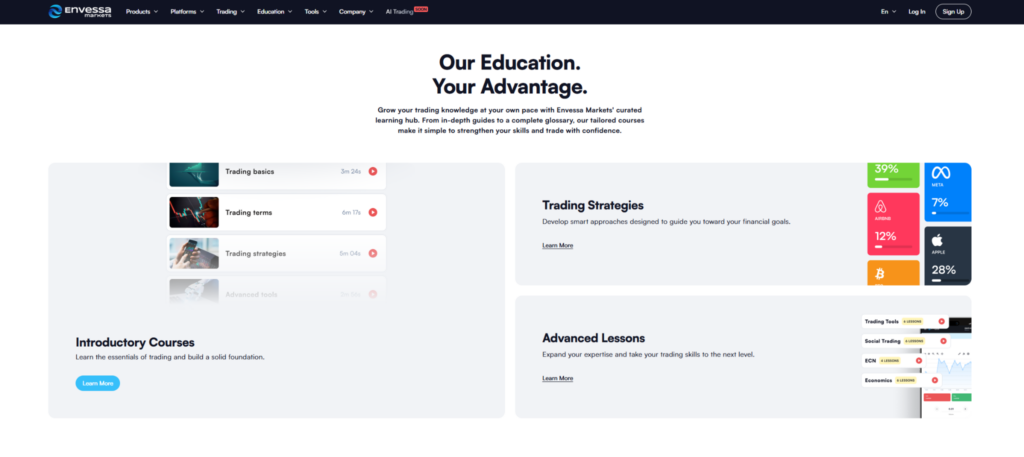
Image source: Envessa Markets Homepage
What Is Scalping in Forex Trading?
Scalping is a very short-term trading strategy where traders attempt to capture small price movements repeatedly throughout the day.
Scalpers typically:
- Hold trades for seconds or minutes
- Open multiple positions daily
- Focus on high liquidity markets
- Prefer tight spreads and fast execution
Popular scalping pairs include:
- EUR/USD
- GBP/USD
- USD/JPY
Scalping requires:
- Strong discipline
- Quick decision-making
- Constant market monitoring
The Envessa Markets forex platform provides real-time pricing and fast execution that may support short-term trading environments.
However, scalping can also increase:
- Emotional pressure
- Trading costs
- Overtrading risk
What Is Day Trading?
Day trading involves opening and closing trades within the same trading day.
Unlike scalpers:
- Day traders hold positions longer
- Fewer trades are typically executed
- Trades may last from minutes to several hours
Day traders often focus on:
- Intraday trends
- News events
- Technical breakouts
- Session volatility
Many day traders avoid holding positions overnight to reduce exposure to:
- Swap fees
- Unexpected market gaps
- Overnight volatility
The Envessa Markets broker platform includes:
- Technical indicators
- Economic calendar tools
- Trading Central integration
- Real-time chart analysis
These features can support day trading strategies across multiple CFD markets.
What Is Swing Trading?
Swing trading is a medium-term trading strategy focused on capturing larger price movements over several days or weeks.
Swing traders typically:
- Use higher time-frames
- Focus on broader trends
- Trade less frequently
- Spend less time monitoring charts
This strategy often appeals to traders who:
- Have full-time jobs
- Prefer lower stress environments
- Avoid constant screen time
Swing trading usually relies heavily on:
- Support and resistance
- Trend analysis
- Candlestick patterns
- Technical indicators
Many traders using Envessa Markets trading tools combine swing trading with risk management strategies such as stop losses and position sizing.
Scalping vs Day Trading vs Swing Trading
Time Commitment
Scalping
- Highest time commitment
- Requires continuous monitoring
Day Trading
- Moderate time commitment
- Active during selected sessions
Swing Trading
- Lowest daily screen time
- Suitable for flexible schedules
Risk and Volatility
Scalping
- Frequent exposure to volatility
- Small profit targets
- High emotional pressure
Day Trading
- Moderate intraday risk
- News volatility plays a major role
Swing Trading
- Larger stop losses
- Overnight market exposure
- Less trading frequency
Envessa Markets forex trading tools allow traders to monitor volatility and market conditions across different timeframes.
Trading Frequency
Scalping
- Dozens of trades daily
Day Trading
- Several trades daily
Swing Trading
- Few trades weekly
More trades do not necessarily mean higher profitability. Many professional traders prioritize quality setups over trade quantity.
Best Personality Fit
Scalping May Suit:
- Fast decision-makers
- Highly disciplined traders
- Traders comfortable with pressure
Day Trading May Suit:
- Active traders
- Technical analysts
- Traders following economic news
Swing Trading May Suit:
- Patient traders
- Long-term thinkers
- Traders balancing other commitments
Which Forex Strategy Is Best for Beginners?
Many beginners are attracted to scalping because it appears exciting and fast-paced. However, in practice, swing trading or structured day trading may be easier for newer traders.
Why?
- Lower emotional intensity
- More time for analysis
- Reduced over-trading risk
- Easier risk management
An Envessa Markets demo account can help traders test multiple strategies before committing to one style in live markets.
Professional traders often recommend:
- Mastering one strategy first
- Focusing on consistency
- Prioritizing risk management over profits
Using Trading Strategies with Envessa Markets
Envessa Markets positions itself as a multi-asset CFD broker offering:
- Forex CFDs
- Stocks
- Commodities
- Indices
- Metals
- Cryptocurrencies
The broker provides:
- Browser-based WebTrader platform
- Mobile trading access
- Technical indicators
- Trading Central analytics
- Educational resources
- Real-time charting tools
The Envessa Markets client area allows traders to:
- Monitor trades
- Access educational content
- Manage accounts
- Analyze market activity
Several Envessa Markets reviews reference the platform’s accessibility for both beginner and advanced traders exploring different trading styles.
The broker also offers leverage up to:
- 1:400 on forex CFDs
While leverage can increase market exposure, traders should use it carefully because it significantly increases risk.
Common Beginner Mistakes
Trying Every Strategy at Once
Switching constantly between strategies often creates inconsistency.
Overusing Leverage
High leverage increases emotional pressure and losses.
Ignoring Risk Management
Every trading style requires disciplined stop-loss planning.
Overtrading
More trades do not always improve results.
Unrealistic Expectations
Professional trading requires patience, practice, and discipline.
Conclusion
Scalping, day trading, and swing trading each offer unique advantages depending on trading personality, schedule, and risk tolerance. Scalping focuses on rapid short-term trades, day trading targets intraday market movement, and swing trading aims to capture larger trends over longer periods.
Rather than searching for the “best” strategy overall, traders should focus on finding the style that fits their personality and lifestyle while prioritizing disciplined risk management.
Envessa Markets provides traders with access to advanced charting tools, educational resources, technical analysis features, and multi-asset CFD trading opportunities suitable for different trading approaches. Beginners can also explore strategies safely through an Envessa Markets demo account before transitioning to live markets.
Risk Warning: Trading CFDs involves significant risk and may result in the loss of your capital. Always trade responsibly and ensure you understand the risks involved.
