



Key Takeaways
- Forex liquidity refers to how easily a currency pair can be bought or sold without causing major price disruption.
- High liquidity usually means smoother execution, tighter spreads, and more stable price movement.
- Low liquidity can lead to wider spreads, higher volatility, and more difficult trade management.
- Envessa Markets forex trading gives traders access to 45+ currency pairs and real-time market tools that help them trade with more awareness.
- Understanding liquidity helps traders choose better trading hours, manage risk, and avoid poor execution conditions.
Introduction
Liquidity is one of the most important concepts in forex, yet many beginners do not fully understand how much it affects their trading results. It influences spreads, execution speed, volatility, and even how reliable a trading setup feels in real time. In this guide, you will learn what forex liquidity is and why it matters for traders on Envessa Markets, along with practical examples that make the concept easier to apply. If you want to trade more efficiently, understanding liquidity is a strong place to start.
Quick Answer
Forex liquidity is the ability to buy or sell a currency pair quickly without causing a large change in its price. In practical terms, high liquidity usually supports smoother execution and tighter pricing, while low liquidity can increase spreads and volatility. For traders using Envessa Markets, liquidity matters because it directly affects cost, timing, and trade quality.
Table of Contents
- What Is Forex Liquidity?
- How Liquidity Works in the Forex Market
- High Liquidity vs Low Liquidity
- A Real Trading Example
- Why Liquidity Matters to Forex Traders
- When Forex Liquidity Is Usually Highest
- How Liquidity Affects Trading Costs on Envessa Markets
- How Traders Can Use Liquidity More Effectively
- How Envessa Markets Supports Liquidity-Aware Trading
- Conclusion
What Is Forex Liquidity?
Forex liquidity describes how easily a currency pair can be traded in the market. When a market is highly liquid, there are plenty of buyers and sellers, which makes it easier to open or close positions quickly and close to the quoted price.
In Envessa Markets forex, this matters because traders are working with CFD instruments that reflect price movement in the underlying market. When liquidity is strong, trading conditions often feel smoother. When liquidity is weaker, prices can become less stable and more expensive to trade.
A simple way to think about it is this: liquidity is what helps the market absorb orders efficiently.
How Liquidity Works in the Forex Market
High Liquidity vs Low Liquidity
High liquidity usually appears when a large number of market participants are active. This often leads to:
- Easier trade execution
- Smaller bid-ask gaps
- More orderly price action
- Better conditions for active traders
Low liquidity tends to create the opposite environment:
- Wider spreads
- Faster, less predictable price movement
- More difficulty entering or exiting cleanly
- Greater exposure to sudden price jumps
This is one reason why Envessa Markets trading conditions can feel different depending on the time of day, the currency pair, and overall market activity.
A Real Trading Example
Imagine a trader opens a EUR/USD position during a highly active market session. Because the pair is widely traded and many participants are involved, the price tends to move in smaller increments and execution may feel more efficient.
Now compare that with a thinner market period, such as a quiet session or a less frequently traded pair. In that case, price may jump more abruptly, spreads may feel wider, and the trade may become harder to manage.
That difference is liquidity in action.
Why Liquidity Matters to Forex Traders
Liquidity affects more than just convenience. It shapes how the trade behaves from entry to exit.
For traders using Envessa Markets broker services, liquidity matters because it influences:
- Spread behavior: highly liquid markets often support tighter pricing
- Execution quality: orders can be filled more smoothly in active markets
- Volatility conditions: low liquidity can produce sudden, sharper moves
- Risk management: stops and targets may be harder to manage when liquidity is weak
From experience, many beginners confuse volatility with opportunity. But if volatility is driven by low liquidity rather than genuine directional strength, the market can become harder to trade, not easier.
When Forex Liquidity Is Usually Highest
Liquidity in forex is not constant. It changes throughout the day depending on which global market sessions are active.
In general, liquidity is often strongest when major trading centers overlap and when major currency pairs are most actively traded. That is why many traders focus on liquid pairs such as EUR/USD, GBP/USD, or USD/JPY rather than jumping immediately into thinner markets.
For Envessa Markets forex trading, this matters because choosing when to trade can be just as important as choosing what to trade. Good setups tend to work better in orderly market conditions than in thin, erratic ones.
How Liquidity Affects Trading Costs on Envessa Markets
The broker information provided states that Envessa Markets cfd trading uses variable spreads, with spreads displayed in real time on the platform. That makes liquidity especially relevant, because spread behavior often reflects overall market activity.
In general:
- More liquid markets often support more competitive spreads
- Less liquid periods may lead to wider spreads
- Short-term traders feel this effect more directly than long-term traders
This is important for anyone using Envessa Markets forex broker services, especially if they trade intraday. A setup that looks attractive on the chart may still be inefficient if market liquidity is weak and costs are less favorable.
Liquidity also connects to overnight decisions. If a trader plans to hold positions beyond the trading day, they should think not only about swaps but also about whether the market environment supports clean risk management.
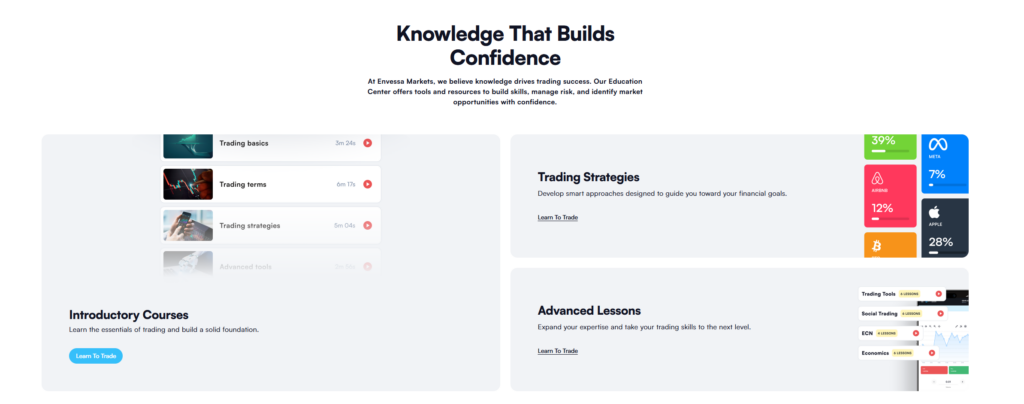
Image source: Envessa Markets Forex Webpage
How Traders Can Use Liquidity More Effectively
A strong trading routine should include liquidity awareness. Traders do not need to become market microstructure experts, but they do need to recognize when the market is likely to behave more efficiently.
A practical approach includes:
- Focusing first on major currency pairs
- Avoiding random trades during very quiet market periods
- Watching how spreads behave before entry
- Being cautious during major news if conditions become unstable
- Matching strategy style to market activity
For example, a breakout strategy in a liquid session may behave very differently from the same strategy attempted in a thin market. The chart may look similar, but the execution conditions are not.
The Envessa Markets demo account is useful here because traders can practice seeing how the same pair behaves during different sessions without risking capital.
How Envessa Markets Supports Liquidity-Aware Trading
Based on the broker information provided, Envessa Markets offers several features that help traders understand and respond to changing market conditions.
These include:
- Access to 45+ forex pairs
- Real-time market data
- Advanced charting tools
- Economic calendar access
- Trading Central analyses
- Browser-based WebTrader and mobile trading access
The Envessa Markets client area and Envessa Markets login provide access to the trading environment where users can review markets, monitor spreads, and manage positions more efficiently.
For beginners, this means the platform is not only a place to enter trades. It is also a place to observe market behavior, compare conditions, and build better judgment over time.
Conclusion
Forex liquidity is one of the hidden forces behind trade quality. It affects spreads, execution, volatility, and the overall feel of the market. Traders who understand liquidity usually make better decisions about when to trade, what to trade, and how to manage risk.
With Envessa Markets, traders can access a broad forex offering, real-time pricing, chart tools, and a demo environment that helps make liquidity easier to understand in practice. A smart next step is to use the Envessa Markets demo account, watch how different currency pairs behave across trading sessions, and build a more informed Envessa Markets forex trading routine from there.
