



Key Takeaways
- Major, minor, and exotic currency pairs behave differently in terms of liquidity, spread, and volatility.
- Beginners usually start with major pairs because they are easier to follow and often more liquid.
- Minor and exotic pairs can offer opportunities, but they usually require more caution and stronger risk control.
- Envessa Markets forex trading gives traders access to 45+ currency pairs through a web-based platform and mobile access.
- The Envessa Markets demo account is a practical way to learn how different pair types behave before trading live.
Introduction
Not all currency pairs trade the same way, and that matters more than many beginners realize. A major pair like EUR/USD usually feels very different from a minor pair such as EUR/GBP or an exotic pair linked to an emerging-market currency. In this guide, you will learn how to trade major, minor, and exotic currency pairs with Envessa Markets, including how each category works, what risks to expect, and how to choose the right starting point for your trading style. The goal is to help you trade with more clarity, not just more activity.
Quick Answer
Major pairs are the most widely traded and usually the most liquid, minor pairs exclude the US dollar but still involve strong global currencies, and exotic pairs combine a major currency with one from a smaller or emerging economy. With Envessa Markets, traders can access 45+ forex pairs and use demo trading, chart tools, and education resources to learn how each category behaves before risking real capital.
Table of Contents
- What Are Major, Minor, and Exotic Currency Pairs?
- How Major Currency Pairs Work
- How Minor Currency Pairs Work
- How Exotic Currency Pairs Work
- How to Choose the Right Pair Type for Your Experience Level
- How to Trade These Pairs with Envessa Markets
- Use the Demo Account First
- Use Charting and Market Tools
- Match Risk to Pair Behavior
- Common Mistakes When Trading Different Pair Types
- Conclusion
What Are Major, Minor, and Exotic Currency Pairs?
Currency pairs are grouped based on how widely they are traded and which currencies they include.
- Major pairs usually include the US dollar and one other heavily traded currency
- Minor pairs do not include the US dollar, but still involve established global currencies
- Exotic pairs combine a major currency with a less frequently traded or emerging-market currency
This distinction matters because each group behaves differently in terms of liquidity, spreads, and price movement. In Envessa Markets forex, understanding those differences can help traders choose more suitable setups and avoid unnecessary risk.
How Major Currency Pairs Work
Major pairs are usually the most heavily traded in the forex market. Because they attract strong global participation, they often offer higher liquidity and smoother price behavior.
Typical traits of major pairs:
- Stronger liquidity
- Generally tighter spreads
- Easier technical analysis for beginners
- Lower chance of irregular price jumps compared with thinner markets
For new traders using Envessa Markets forex trading, major pairs are often the most practical place to begin. They tend to respond more cleanly to economic data and major market themes, and they are usually easier to monitor consistently.
A practical beginner example is focusing on one or two majors rather than jumping into many pairs at once. That helps build familiarity with how those pairs move during different trading sessions.
How Minor Currency Pairs Work
Minor pairs exclude the US dollar but still involve major world currencies. These pairs can offer solid opportunities, but they often move a little differently than majors because their liquidity is usually lower.
Typical traits of minor pairs:
- Lower liquidity than majors
- Price action can be slightly less predictable
- Spreads may be wider than the most liquid major pairs
- They may react more directly to regional economic themes
For traders using Envessa Markets trading, minor pairs can become useful once the basics are understood. They may suit traders who already have some experience reading charts and managing cost awareness.
A real-world example would be a trader who has already spent time on major pairs and wants exposure to a specific European or cross-currency theme without using the US dollar as the central driver.
How Exotic Currency Pairs Work
Exotic pairs usually combine a major currency with one from a smaller or emerging economy. These pairs can be attractive because they sometimes show larger moves, but they also come with more risk.
Typical traits of exotic pairs:
- Lower liquidity
- Wider spreads
- Sharper volatility
- Greater sensitivity to local economic and political events
This is where experience matters. A beginner may see a fast-moving exotic pair and think it offers bigger opportunity, but in practice, wider spreads and thinner liquidity can make trade management much harder.
For anyone using Envessa Markets cfd products, exotic pairs should usually be approached carefully and only after building a strong risk management routine.
How to Choose the Right Pair Type for Your Experience Level
A good rule is to match the pair type to your current skill level, not your excitement level.
A practical framework:
- Beginners: start with major pairs
- Developing traders: begin exploring minors with smaller size
- Advanced or well-prepared traders: consider selective exotic exposure
This matters because each step up usually introduces more complexity in pricing, volatility, and trade execution.
The Envessa Markets broker environment offers access to a broad range of instruments, but that does not mean every trader should use the full range immediately. Good trading usually becomes better by narrowing focus, not expanding it too quickly.
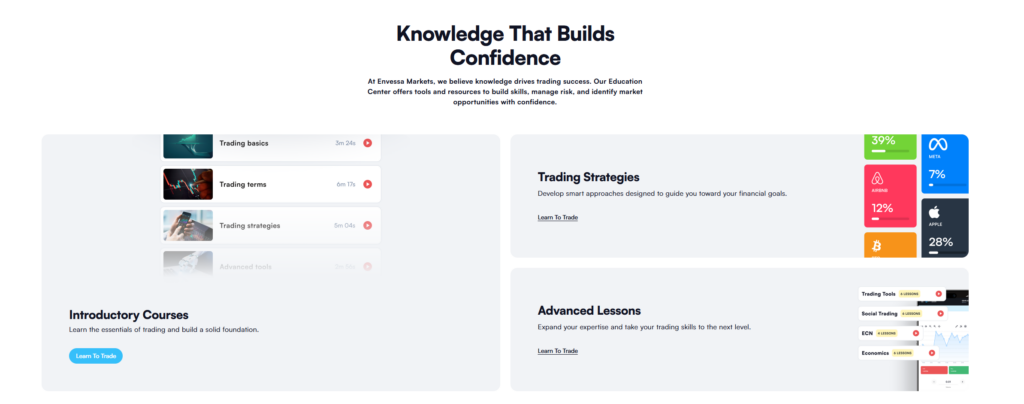
Image source: Envessa Markets Forex Webpage
How to Trade These Pairs with Envessa Markets
Use the Demo Account First
The Envessa Markets demo account is one of the best ways to understand the difference between major, minor, and exotic pairs. On demo, traders can compare how spreads behave, how quickly prices move, and how different market sessions affect trade conditions.
This is especially useful because many of the differences between pair types only become obvious when you watch them in real time.
Use Charting and Market Tools
Envessa Markets provides access to charting tools, an economic calendar, Trading Central analyses, and educational resources. These tools matter because pair selection is not just about choosing a symbol. It is about understanding what drives it.
For example:
- Major pairs may respond strongly to broad macroeconomic data
- Minor pairs may reflect cross-market currency relationships
- Exotic pairs may react to more localized economic or political developments
The Envessa Markets client area and Envessa Markets login access also help traders manage their account and platform environment more efficiently.
Match Risk to Pair Behavior
Risk should increase only when your understanding increases. Because Envessa Markets forex broker services include leverage of up to 1:400 on FX, it is especially important not to use the same approach for every pair category.
A practical rule:
- Use smaller size on more volatile or less liquid pairs
- Be more cautious with wider spreads
- Avoid assuming a setup on an exotic pair behaves like a major pair
This is one of the most common sources of avoidable losses.
Common Mistakes When Trading Different Pair Types
Many traders make the mistake of treating all forex pairs the same. That usually leads to poor trade selection or poor cost control.
Common mistakes include:
- Starting with exotic pairs too early
- Ignoring spread differences between pair types
- Using too much leverage on volatile pairs
- Trading too many currencies at once
- Choosing pairs without understanding what drives them
For traders in Envessa Markets forex, the safest path is usually to master one category before moving on to another.
Conclusion
Major, minor, and exotic currency pairs each offer different trading conditions, and understanding those differences can improve both strategy and risk management. Major pairs are usually the most beginner-friendly, minor pairs offer additional opportunities once core skills improve, and exotic pairs require more caution because of wider spreads and lower liquidity.
With Envessa Markets, traders can access 45+ forex pairs, use the Envessa Markets demo account, and build experience through charting tools, education, and platform support. A smart next step is to start with a few major pairs, practice through the Envessa Markets client area, and expand gradually as your Envessa Markets forex trading process becomes more consistent.
